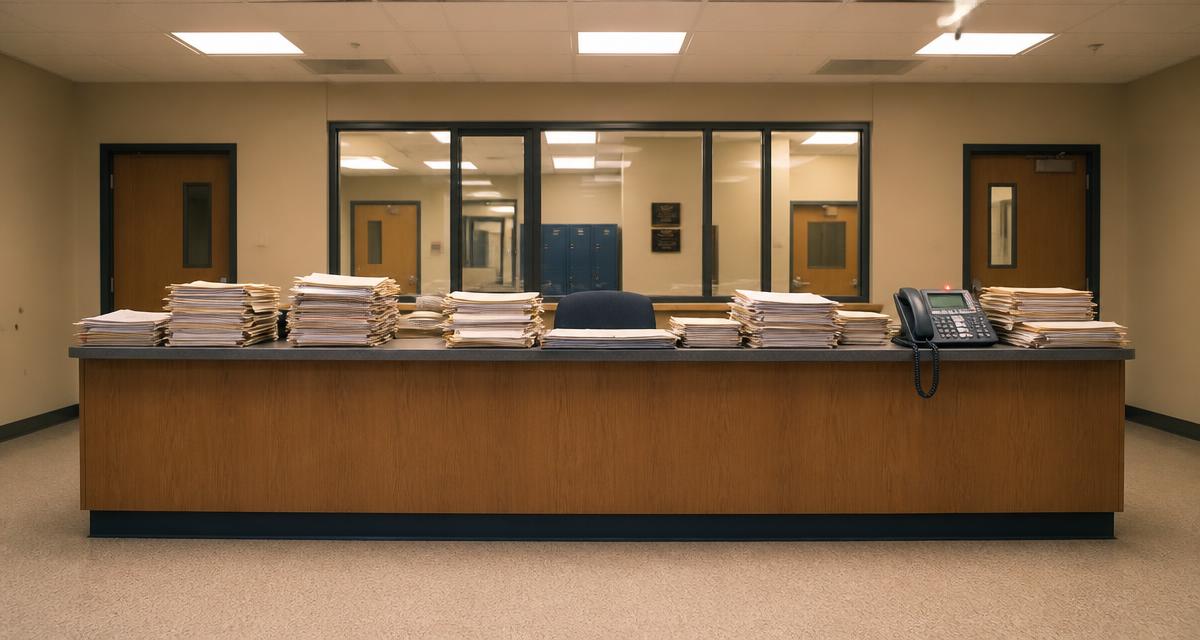
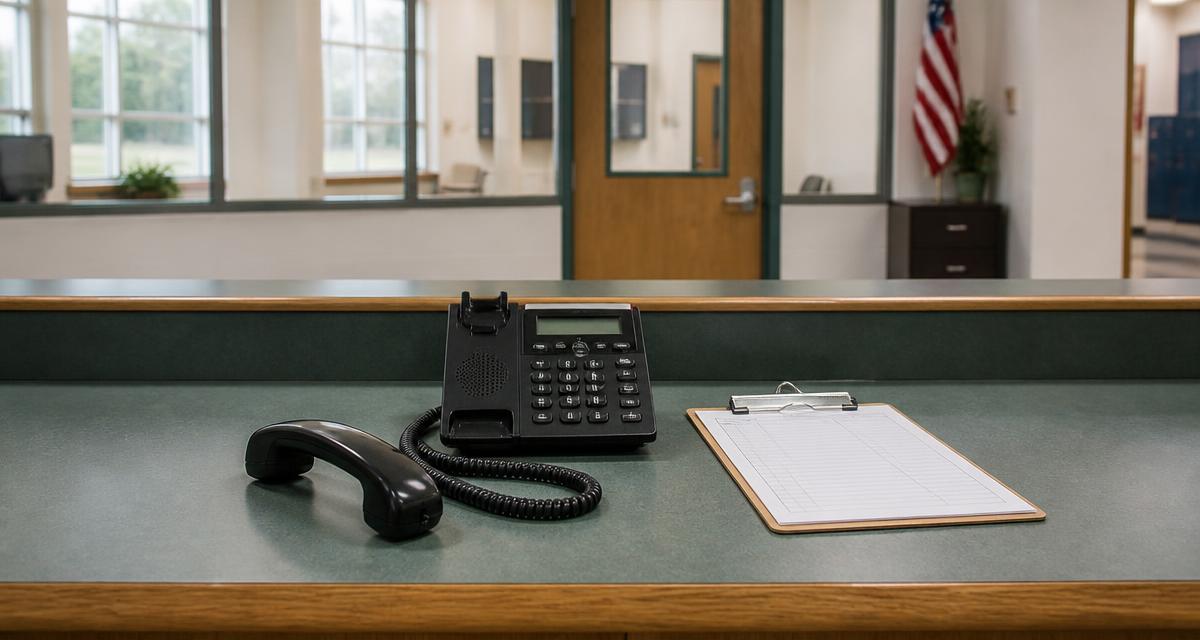
We want to spend this one just describing what a week is actually like inside a K-12 main office, because we think the problem is best understood not through statistics but through the sheer texture of the day, and because the people who run those offices rarely get the dignity of having their work seen clearly. If you've ever worked a school front desk you already know all of this in your bones, and if you haven't, it's worth understanding, because it's one of the more quietly heroic and quietly impossible jobs in any community.
Start on a Monday, which is always the worst, because the weekend has generated a backlog of everything. Parents who meant to call Friday are calling now. The absence line is flooded with kids who got sick over the weekend or are still sick. The forms that were due are coming in late with questions attached. And layered over all of it is the ordinary Monday volume, the schedule questions, the transportation questions, the who-do-I-talk-to-about questions, all arriving through a phone that does not stop ringing and a front counter that does not stop having a person standing at it and an inbox that refills faster than anyone can empty it.
The cruel arithmetic is that there is almost always exactly one person, sometimes two, expected to be the single point of contact for a building that might hold hundreds or thousands of students and all of their families. When the phone rings while that person is checking in a visitor, one of those two things has to lose, and it's almost always the phone, because the visitor is standing right there and can't be ignored, so the call rolls to voicemail or to nothing, and a parent who needed something just learned that the school didn't pick up. That's not a failure of the staff, it's a failure of asking one human to be in several places at once, which is what the job structurally requires.
The research on missed calls across all kinds of organizations is blunt about what happens next, and it applies to schools as much as anywhere, which is that most people who can't get through don't leave a voicemail and don't try again, they just carry the small frustration forward. For a parent that frustration compounds, because it's about their kid, so the unanswered call about the bus becomes a story they tell about how you can never reach the school, and that story spreads through the parent community and quietly erodes the trust the school depends on, all from a phone that rang at the wrong moment.
Then there are the days that break the normal pattern entirely, the snow day, the early dismissal, the lockdown drill, the incident that has every parent in the building's community calling at the exact same moment wanting to know their child is safe. Those are the days the front office phone doesn't just stay busy, it becomes a genuine crisis of capacity, because the one thing every parent needs in that moment is fast reassurance, and the one thing a two-person office cannot provide is fast reassurance to five hundred people simultaneously. Those are also the days when a communication failure does the most damage, because a frightened parent who can't reach the school remembers it for years.
We've started thinking about the front office phone as a place where two completely different kinds of work get jammed together, and the jamming is the whole problem. There's the routine work, the schedule and the bus and the lunch menu and the office hours and the enrollment deadline, which is high volume and needs no human judgment at all. And there's the human work, the worried parent, the sensitive situation, the conversation that needs warmth and discretion, which is lower volume but is the entire reason a human is there. The routine floods in and buries the human, so the staff spend their scarce attention on the work anyone could do and have nothing left for the work only they can do.
This is exactly the shape of problem where we think a tool like ours genuinely fits, and we'll be concrete about it rather than vague. An AI phone answer picks up every call instantly, on the first ring, even when both staff are with families, and it can handle the routine layer completely, telling the parent the bus is running late or the office closes at four or the enrollment packet is due Friday, in the parent's own language, at any hour including the evenings and weekends when the office is dark. The genuinely human calls, the worried parent or the sensitive matter, get recognized and routed cleanly to a real person rather than trapped in a machine.
We want to be careful here because schools are not retail, and the sensitivity is real, and we'd be wary of any pitch that treated a frightened parent like a support ticket. So the point isn't to put a machine between families and the school, it's the opposite, to stop the routine flood from burying the humans so that when a parent genuinely needs a person, a person is actually available instead of drowning in bus-route questions. On the surge days, the snow day and the early dismissal, the same capability means every parent gets an instant answer instead of a busy signal, which on those days specifically can matter enormously.
What we find genuinely hopeful, watching offices that have made this shift, is that it doesn't make the school feel less human, it makes it feel more reachable, which for a parent is a large part of what feeling cared-for actually means. The parent who gets an instant clear answer at nine at night about the field trip form doesn't feel fobbed off onto a bot, they feel like a school that had its act together and respected their time. And the front office staff, relieved of the impossible job of being everywhere at once, get to be present and warm with the families in front of them instead of frazzled and behind, which is what drew most of them to the work in the first place.
So if you run or work in a school office, the thing we'd gently name is that the phone that never stops is not a sign you're doing it wrong, it's a sign you've been handed an impossible job with tools from an earlier era, and that the impossible part, the being-everywhere-at-once part, is finally something that can be lifted off you. The warm human core of the work stays exactly where it belongs, with the humans. It's the flood of routine that can be handled elsewhere, so that the people who chose to serve a school community actually get to serve it, instead of spending their days apologizing for a phone they couldn't reach in time.