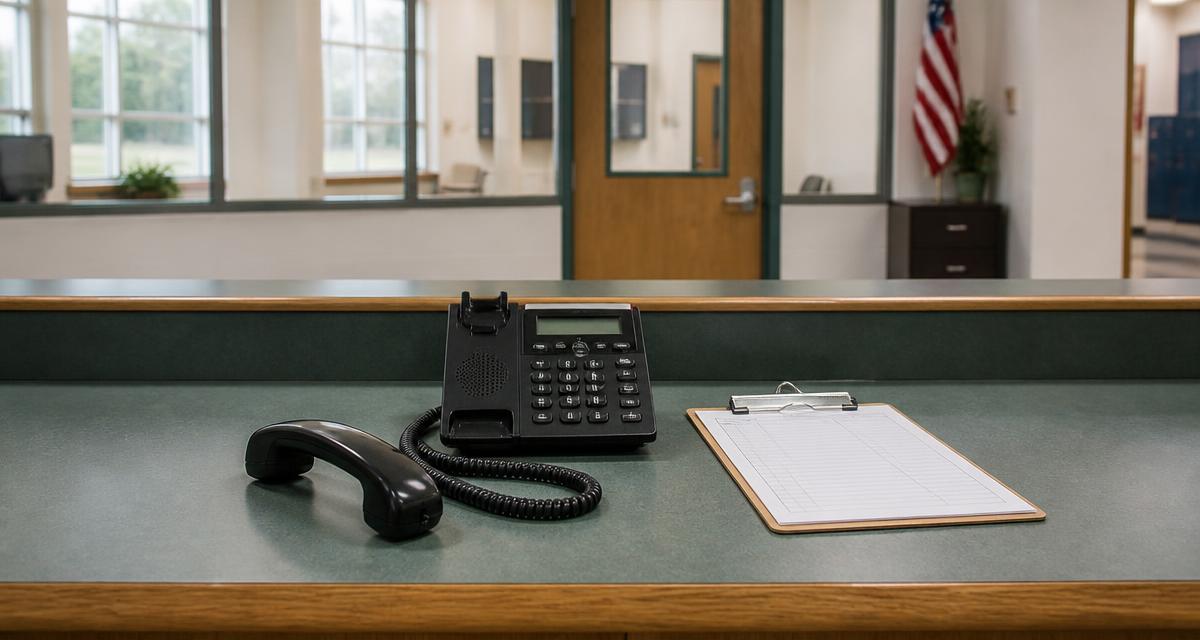

If you work in a school office, you could probably recite the questions in your sleep, because they arrive in a steady stream that never quite stops, the same handful over and over, phrased a hundred different ways by a hundred different parents. What time does drop-off start. When is the early release day. How do I add money to the lunch account. Where do I find the field trip form. Is school open on the holiday. What's the dress code for the concert. Who do I email about my kid's bus. And the quietly maddening part, the thing that makes answering the fiftieth one so demoralizing, is that the answers already exist, sitting right there on the school's own website, where the parent either couldn't find them or didn't think to look.
We want to be fair to the parents here, because it's easy to get frustrated at them and the frustration is misplaced. A parent juggling work and kids and life is not going to hunt through a school website's menus to find the early-release schedule, they're going to fire off a quick email because that's faster for them, even though it's slower for everyone in aggregate. And honestly the websites don't help, because school sites are often a maze of PDFs and nested pages where the answer might be technically present but practically buried, so the email isn't laziness, it's a rational response to information that's there but not findable.
The result is that a large share of a school office's email volume is people asking for information the school has already published, which is a strange and wasteful situation when you name it plainly. The staff spend real hours of real days retyping answers that exist elsewhere, or copying and pasting links, or worse, letting the emails pile up behind the genuinely complicated ones until a parent who asked a simple question on Monday hears back on Thursday and has already formed an opinion about how responsive the school is. The information was available the whole time. The bottleneck was never the information, it was the human required to relay it.
This is exactly the kind of gap our tool was built for, and we'll be concrete about how it actually works rather than hand-waving. The Guru reads the school's website, all of it, the calendar and the policies and the forms and the schedules, and turns it into something it can answer from instantly. Then you connect it to the office email, and when a parent emails asking where the field trip form is, the Guru recognizes the question, finds the answer that was already on the site, and replies right away with the actual information or the actual link, in the parent's language, without a staff member ever touching it. The answer that used to wait in a queue now goes out in seconds.
The thing we'd stress, because it's what separates this from the careless automation that gives AI a bad name, is that the answers are anchored to the school's real published information rather than made up. The Guru isn't guessing at the early-release date, it's pulling the actual date from the actual calendar the school maintains, which means it can't confidently tell a parent the wrong thing the way a less careful system might. And when a parent asks something that isn't routine, something that genuinely needs a human, a sensitive question about their child or a situation that doesn't have a published answer, the Guru hands it off to a real person instead of bluffing.
There's a compounding benefit here that we didn't fully appreciate until we watched it happen, which is that this frees the office staff to actually answer the emails that matter. When the routine half of the inbox handles itself, the human hours that used to evaporate on lunch-account questions get redirected to the emails that carry weight, the worried parent, the complicated enrollment situation, the sensitive matter that needs care and discretion. The staff aren't doing less, they're doing the part of the job that actually needed them, and doing it faster because they're not buried, which is a better day for them and a better experience for the families.
We should be honest about the limits, because we always try to be. The Guru can only answer what's actually findable in the school's content, so if the dress code for the winter concert was never written down anywhere, it can't invent it, and it'll say so and route the question rather than guess. This occasionally surfaces the fact that some of a school's real answers live only in a veteran secretary's memory and nowhere else, which is its own risk, since that knowledge walks out the door when that person retires. Getting those answers written down so the Guru can use them tends to make the whole office more resilient, not just more automated.
There's also a language layer to this that matters more than most schools account for, and it connects to a real equity issue. In many communities a significant share of families are more comfortable in a language other than English, and surveys have found large numbers of parents reporting that language barriers made it hard to participate in their child's school. A parent who emails a question in Spanish and gets an instant accurate answer in Spanish is included in the school community in a way that a parent waiting for a translator, or getting no answer at all, simply isn't, and the routine-question layer is exactly where that inclusion is easiest to deliver.
Where this is heading, we suspect, is that parents are going to increasingly expect from schools the same instant responsiveness they get from everything else in their lives, and the schools that meet that expectation are going to feel dramatically more trustworthy and organized than the ones where a simple question takes three days. That's not really a technology prediction, it's a prediction about parent expectations, which are rising whether or not schools are ready, and the routine-email flood is both the easiest place for a school to fall behind and the easiest place for it to get ahead.
So the small reframe we'd offer is that the endless repetitive parent emails aren't a sign of disorganized parents or an overwhelmed staff, they're a sign that the school's real information isn't reaching families in the moment they need it, and that gap is now genuinely closable. The answers already exist. The staff already know them. The only thing that's changed is that the relaying of those answers no longer has to consume a human being's whole morning, which frees that human being to do the part of school communication that a human being was always meant to do.