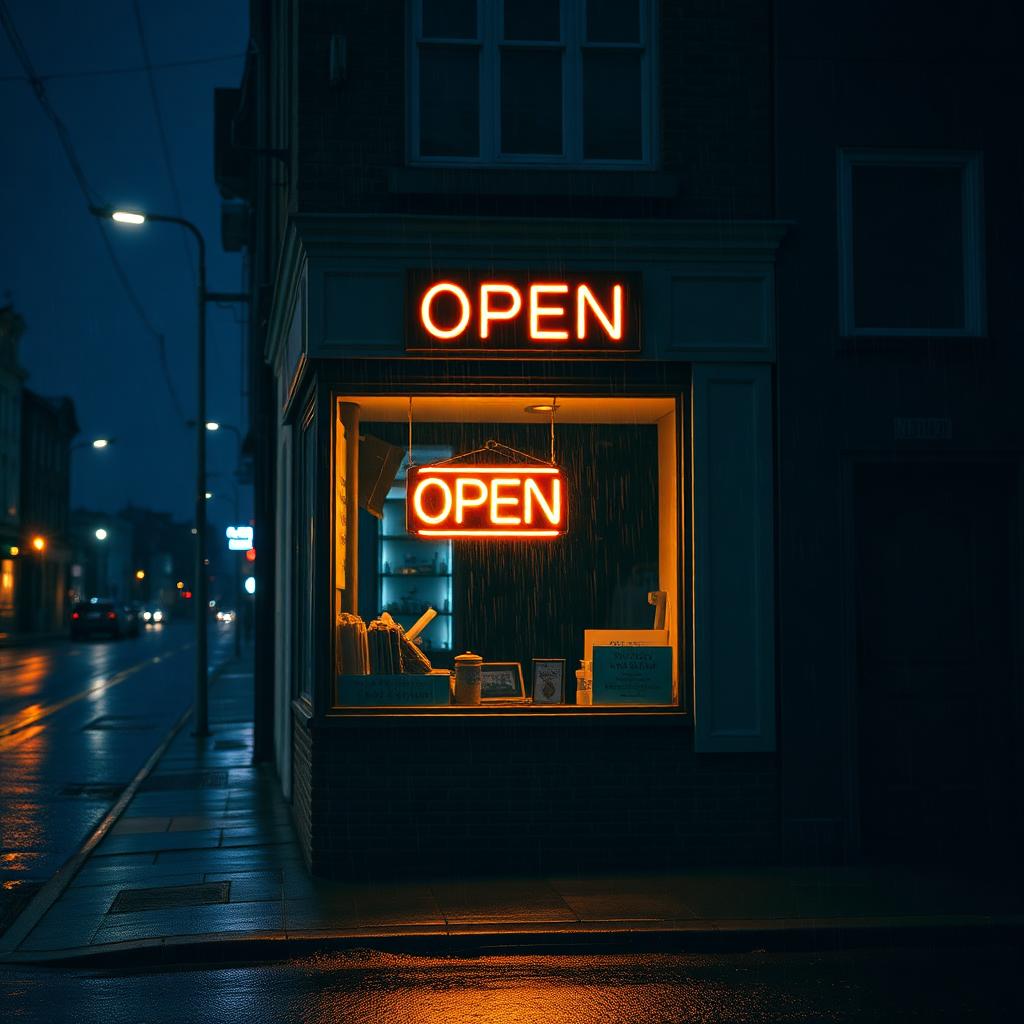
Of all the ways a business loses customers, the one we find most haunting is the after-hours loss, because it's the one that leaves no evidence at all. A customer who has a bad experience during the day at least leaves a trace, a complaint, a frustrated call, a moment you can point to and learn from. The customer who needed you at nine in the evening, or on a Sunday, or during the holiday you closed for, simply reached out into the dark, found nothing, and moved on, and you will never know they existed. The loss is total and silent, and that combination is what makes it so easy to ignore and so quietly expensive.
We've gotten a little obsessed with this invisible demand, partly because the data on it is so stark once you go looking. The research on missed calls found that the large majority of calls placed after business hours roll to voicemail and are never returned, and that most people who hit voicemail won't leave one and won't call back, they'll just try someone else. Stack those facts together and you get a picture of after-hours demand as a kind of leak with no gauge, water running out of a pipe in a part of the building nobody walks through, where the only sign anything's wrong is that the level keeps dropping for reasons that never quite get explained.
The reason this demand is so easy to underestimate is that we naturally assume customers operate on our schedule, when of course they operate on theirs. People research and decide and reach out when their own lives allow, which is often precisely when they're not at work themselves, which is precisely when most small businesses are closed. The evening, the weekend, the moment after the kids are finally asleep, these are when a person finally has the headspace to deal with the insurance question or book the appointment or get the quote, and a business that's dark in exactly those windows is dark during a real and large share of when its customers are actually ready to act.
There's a particular irony in this for the kinds of businesses that handle urgent or emotional needs, where after-hours isn't a fringe case but often the most important moment of all. The home that floods at midnight, the family that needs a funeral home in the small hours, the property emergency on a holiday weekend, these are not edge cases to those customers, they're the entire reason the relationship exists, and a business unreachable in that moment hasn't just lost a transaction, it's failed at the one thing it was supposed to be there for. The after-hours gap is widest exactly where it matters most, which is a hard thing to sit with.
We want to be fair to business owners here, because the after-hours problem has always felt genuinely unsolvable in a way that bred a sort of learned helplessness about it. You can't ask your staff to work all night. You can't afford a round-the-clock crew. Voicemail doesn't work because customers won't use it, and a basic answering service often can't actually answer the question the customer has, so it just takes a message that still waits until morning, by which point the customer has usually solved their problem elsewhere. For most of history, being closed when you're closed was simply a fact of physical reality, and so the loss got accepted as the cost of being human and needing sleep.
What's genuinely new, and what we find quietly remarkable, is that the constraint that made after-hours loss inevitable has loosened in a way it never had before. The reason you couldn't help the nine-o'clock customer was that helping required a person, and people sleep, but a growing share of what those customers need at nine o'clock doesn't actually require a person, it requires an answer, and answers don't need to sleep. The booking, the basic question, the quote, the reassurance that yes we can help and here's the next step, these can happen in the windows that were always dark, which changes the after-hours problem from a law of nature into something closer to a choice.
We'd temper that with the caveat that not everything should be handled by a machine at midnight, and that the genuinely urgent human emergency still needs a path to a real person, which a thoughtful setup preserves. But the bulk of after-hours demand isn't emergency, it's just ordinary business happening on the customer's schedule instead of yours, and most of it is the routine stuff that's perfectly well served by an instant accurate answer regardless of the hour. The skill, as always, is in the line between what to handle and what to route, but the prize for getting it right is enormous because you're capturing demand that previously vanished entirely.
The thing we keep coming back to is that this isn't really about extending your hours, it's about ceasing to lose customers you never knew you were losing. A business that becomes reachable after hours often discovers, sometimes to its genuine shock, just how much demand was arriving in those windows all along, because for the first time there's a record of it, the bookings made at eleven at night, the questions answered on the holiday, the leads captured on the Sunday that previously would have evaporated. The demand was always there. The only thing that changed is that someone was finally home to catch it.
Looking forward, we suspect the always-closed business is going to start feeling, to customers, the way a store with its lights off and door locked feels when you walk up needing something, which is to say a little abandoned, a little like the business doesn't really want your trouble. As more and more companies become reachable around the clock, the ones that aren't won't read as normal anymore, they'll read as unavailable, and the after-hours customer who used to shrug and try elsewhere will increasingly expect to be caught and will hold it against the businesses that drop them. The expectation of being reachable is expanding to fill the whole clock.
So the question we'd leave with an owner is an uncomfortable one, which is how much business you might be losing in the hours you can't see, given that by definition you have no record of it. The customers who reached out after you closed didn't complain and didn't leave a mark, they just quietly went to whoever was reachable, and the only way to find out how many there were is to finally be reachable yourself and watch what shows up. Our strong suspicion, based on every business we've watched do this, is that the number is larger than anyone expects, and that the most expensive customers are the ones you've been losing in the dark without ever knowing their names.