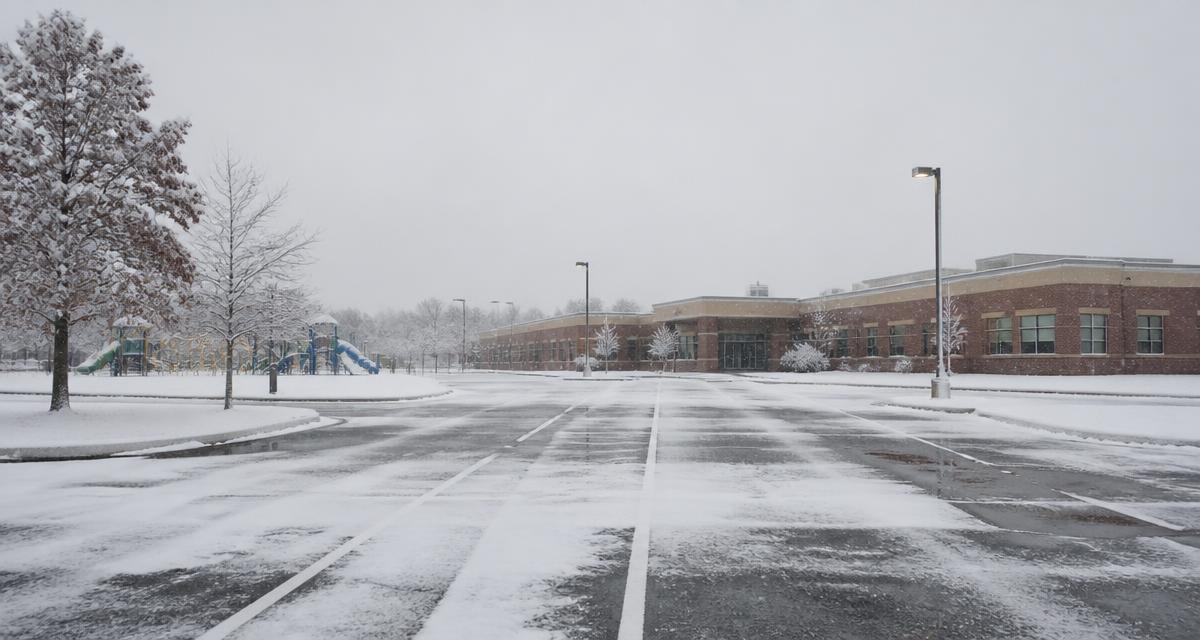
At 5:40 on a snowy morning, the superintendent makes the call. By 5:55 the announcement is out: the district's notification system has sent it, the website banner is up, the local news has it on the crawl. Getting the word out is a solved problem for most schools. It takes fifteen minutes and it works.
Then the replies start.
Is the afternoon kindergarten session cancelled too? Is aftercare open? Is tonight's basketball game still on? Does the delayed opening mean the buses run two hours late on the same routes? Is breakfast still served? Is this a make-up day in June? Is the SAT at the high school on Saturday still happening? Within half an hour, hundreds of families want a follow-up answer, and the office staff are themselves stuck in their driveways.
That's the surge nobody plans for. Not the announcement, which you control, but the wave of questions it sets off, arriving all at once, all about the same piece of news.
Why this day is different
We've written about the everyday flood of bus and lunch questions, and about the front office phone that never stops across an ordinary week. Snow days, early dismissals and last-minute schedule changes are a different shape of problem. The ordinary load is a steady stream. This is a spike, compressed into the first hour after your own announcement, when the building is often closed and nobody is at the desk.
And almost every question in that spike has the same answer source: the update you just published, plus policies you already have. The inclement weather policy. The aftercare policy. The athletics schedule. The calendar that says where the make-up days go. The information exists. What's missing is anyone available to relay it three hundred times before 7 a.m.
Publish first, then announce
That's where a Guru earns its keep, and it comes down to order of operations.
The Guru answers from what you've published. So the update needs to exist on your website before the announcement goes out, not after. Post the page, re-index (a click in the admin, or automatic if your site triggers it through the API), then send the announcement. When the replies come in by phone, web chat, text, WhatsApp or email, the Guru answers each one from the published update, in seconds, in the family's own language (English or Spanish on the phone), with a link to the page. The tenth parent doesn't wait any longer than the first, because the Guru answers conversations in parallel rather than one at a time.
Grounding matters more on a day like this than on any other. A wrong answer about dismissal time means a child waiting at a closed building. Because the Guru answers from your actual update, it tells a parent what you published, not a plausible guess. If the update doesn't cover something, the Guru says so rather than inventing an answer.
Write the update for the questions you know are coming
Which means the most useful preparation happens before the first snowflake. Keep a template for weather closures and early dismissals that answers the follow-ups in advance:
- Which schools and programs are affected, including preschool and evening programs
- Bus times and whether routes change
- Aftercare and before-care: open, closed, or early close time
- Meals: whether breakfast or lunch is served
- Athletics, rehearsals and evening events
- Whether it's a make-up day, and when it'll be made up
- Where and when the next update will be posted
Every line you fill in is a question the Guru can answer for every family who asks. Every line you leave out is a question that lands in someone's voicemail.
Anything about a specific child goes to a person
Here's the line we draw clearly. The Guru knows your published information. It doesn't know where any particular child is, who's picking them up, or what happens if a parent can't get there by 12:30. It shouldn't pretend to.
"My son's medication is in the nurse's office." "Can my daughter go home on her friend's bus?" "I'm stuck at work, who stays with my kid?" Those go to staff. During the hours you configure, a calling parent is put through to a live person, and with Live Connect switched on, a parent on the school's website can reach a signed-in staff member by audio or video. By text, the Guru points the parent to live support. When a parent sounds worried or upset, it escalates rather than answering with policy. Outside the hours live support is set to cover, it tells the parent plainly that live help is closed, so nobody waits on a reply that isn't coming. The Guru takes the three hundred routine replies so those few people have room for the thirty that are really about a child.
The morning after
Once the day has passed, spend ten minutes in the conversation dashboard. Look at the usage-by-hour chart for that morning and you'll see the shape of the spike: when it started, when it peaked, how long it lasted. That's useful for knowing when someone should be reachable next time.
Then search the log for the questions the update didn't cover. If thirty parents asked whether the robotics club met, that line goes into the template. If families kept asking the same thing in slightly different words, the update was unclear on that point. Each surge makes the next one quieter, because the template gets better.
A day families remember
Parents judge a school on its hard days more than its easy ones. A closure morning when every question got a clear answer in seconds, and the worried parent with a real problem reached a real person, builds more trust than any newsletter. It's also a day your office staff don't spend digging out their driveways while their phones melt.
The announcement was always the easy part. With the update published first and a Guru answering for the school, the replies can be too.